Can solar systems work without batteries in China? Yes, in many cases. A grid-connected solar system can send daytime electricity to a home or business and export surplus power to the grid. It does not need a battery to generate electricity. The practical answer depends on the system design, local grid connection requirements, and how electricity is used.
Picture a rooftop in Jiangsu producing strongly around noon, while the household is mostly empty. Without storage, unused power may flow to the grid, subject to the applicable connection and settlement arrangements. In the evening, the family may draw electricity from the grid instead. That mismatch matters. A battery can shift some solar energy into later hours, but it adds cost, equipment, and maintenance considerations. For a home with daytime air-conditioning, pumps, or workshop tools, direct solar use may be more valuable than it is for a household that is empty until dusk.
There is one important limitation. A standard grid-tied inverter usually shuts down during a grid outage, even when sunlight is available. This protects workers and equipment; it also means a battery-free system normally cannot provide backup power by itself. Not always. Certain systems use separate backup equipment, so buyers should verify the exact design rather than rely on a sales label. China’s local grid procedures, export arrangements, and project economics can vary. Review the inverter specifications, recent electricity bills, and utility requirements with a qualified installer. The answer is yes—but whether it suits a particular site deserves a careful look.
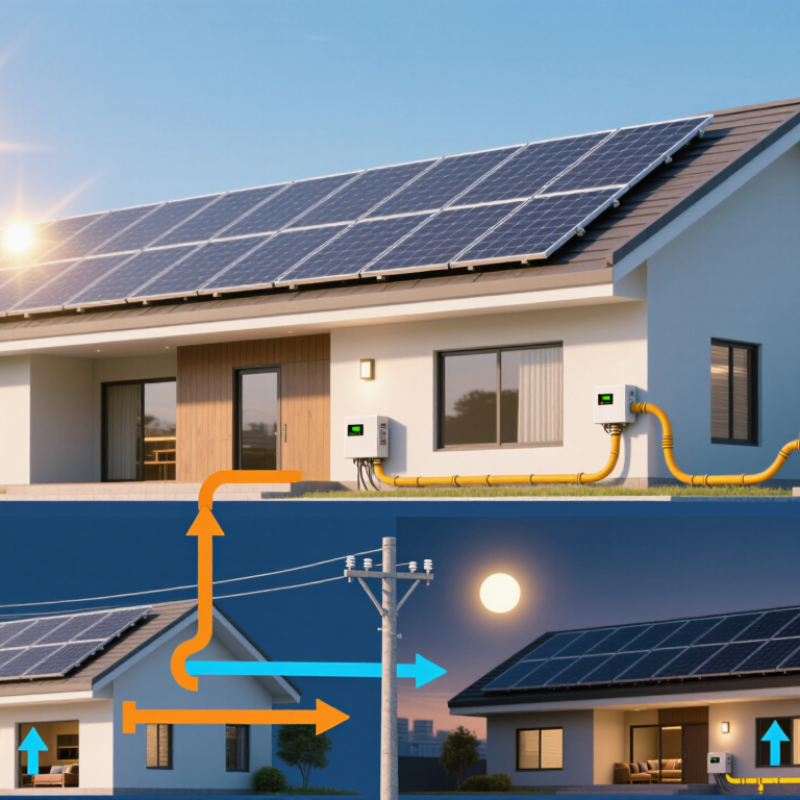
On China’s nominal 220 V, 50 Hz grid, “battery-free solar” usually means a grid-connected photovoltaic system, not an off-grid one. Its inverter converts panel output into AC electricity and synchronizes it with the utility supply. China’s GB/T 156-2017 specifies standard system voltages and frequency. No battery required. During sunny hours, solar power can serve household loads; surplus may flow to the grid, depending on the connection arrangement.
At night, or when panels produce too little, the home draws power from the grid. During a grid outage, a standard grid-following inverter generally shuts down to avoid energizing lines under repair. That detail surprises people. Battery-free therefore does not mean backup power or energy independence. The IEA PVPS Snapshot of Global PV Markets 2024 reports that China added about 216.9 GW of solar capacity in 2023, showing how central grid connection has become in the market. Yet capacity growth alone cannot tell you whether a particular home can export surplus electricity.
Tips: Check your utility’s interconnection and export settings before choosing system size. Watch the inverter display around midday: it can show whether panels are supplying the home or exporting energy. If backup during outages matters, a battery or another approved backup setup may be needed. The trade-off is easy to miss.
A grid-tied inverter converts rooftop panels’ direct current into alternating current synchronized with the home and utility grid. Household appliances use available solar power as it is generated. When clouds reduce output, the grid supplies the shortfall; when panels produce more than the home needs, surplus power can flow outward through the meter. No battery is involved.
The scale is significant. China’s National Energy Administration reported 96.29 gigawatts of newly installed distributed solar capacity in 2023, in its annual power-industry statistics. For a household, the balance changes minute by minute: a kettle may draw more than the panels produce, while an empty home at noon may send energy to the grid. A bidirectional meter records that exchange. Settlement and export arrangements can vary by location.
At night, solar panels produce nothing, so the home imports electricity. During a grid outage, standard grid-following inverters shut down to protect utility workers, even if the sun is shining. Real homes are messier. Without storage or a suitable backup system, solar power alone cannot keep essential circuits running through an outage.
Can Solar Systems Work Without Batteries in China?
When Battery-Free PV Works: Daylight Use and a Stable Grid Connection
A solar system can work without batteries when its electricity is used as it is produced. In China, this setup can suit homes or small businesses with steady daytime demand. Think of an office running computers and air conditioning, or a workshop operating pumps around midday. Solar power supplies part of the load, while the grid fills any shortfall. Extra generation may be exported where the local connection and metering arrangements allow it. The key is matching panel output to everyday use, not expecting sunlight to follow a fixed schedule.
A stable grid connection matters. Without storage, excess daytime power cannot be saved for evening use. At night, the property draws electricity from the grid. A standard grid-connected inverter also shuts down during a power cut, even when the sun is shining, to protect workers repairing the network. No backup, then. A system designed for backup needs suitable equipment and careful installation. Local connection requirements can vary, so confirm them before choosing a system.
Tips: Check your bills for daytime demand and compare it with expected solar production. Ask a qualified installer to assess roof shade, inverter sizing, and grid-export options. Leave room for uncertainty; household habits change, and estimates are not guarantees.
In China, a standard grid-tied inverter monitors the utility supply. If an outage interrupts grid voltage or frequency, anti-islanding protection disconnects the inverter. This prevents rooftop panels from sending power onto lines that crews may believe are de-energized. That is intentional. It helps protect workers and nearby equipment.
During an outage, panels may still receive strong midday sun, but a standard grid-tied inverter usually stops supplying household circuits. Without batteries or a specifically designed backup system, your lights and refrigerator may remain off. Solar power resumes after the grid returns and the inverter confirms stable conditions. Exact behavior depends on system design and utility requirements. It can feel counterintuitive: sunlight is available, yet the sockets are dark. That does not automatically mean the system is faulty.
Tips: Before installation, ask whether the inverter supports backup operation during outages. Confirm which circuits it can power, and whether batteries or additional equipment are required. Have a qualified installer explain the changeover process; small details matter.
China’s solar capacity reached 886.7 GW by the end of 2024, according to the National Energy Administration (NEA). The agency reported that 277.17 GW of solar capacity was added during the year, lifting the total 45.2% year on year. This is a national capacity figure, not a measure of steady power at every hour. Scale matters.
A battery-free system can work when it is grid-connected. Panels serve daytime loads; the grid supplies electricity after sunset or during cloudy periods. However, ordinary grid-tied inverters usually disconnect during an outage to protect utility crews and equipment. Without storage or another islanding-capable backup source, solar panels may not keep essential circuits running. Not always.
The NEA’s 2024 energy-storage report recorded 73.76 GW and 168 GWh of new-type storage in China by year-end. Average duration was about 2.3 hours. That growth shows flexibility is increasingly important, but it does not make a battery mandatory for every rooftop. Household loads, export arrangements, outage needs, and local grid conditions all matter. A common blind spot is assuming that huge national PV capacity guarantees household backup; it does not.
China’s cumulative solar photovoltaic (PV) capacity reached 886.7 GW in 2024, according to the National Energy Administration.
Grid-connected solar systems can operate without onsite batteries by sending surplus power to the grid and drawing electricity from it when solar output is low. Standalone systems generally need batteries or another backup source to supply power after sunset. These capacity figures show PV growth, not battery adoption.
It converts panel electricity into household-compatible power. Appliances use it as it is generated.
The grid supplies the shortfall. A kettle may need more power than the panels provide at that moment.
Surplus power may flow to the grid through a bidirectional meter. Export arrangements vary by location.
It can suit homes or small businesses with steady daytime use. Offices running computers or air conditioning may use more solar power directly.
No. At night, panels produce nothing, so the property draws electricity from the grid.
Usually not. Its inverter shuts down to protect utility workers, even if sunlight is available.
Review electricity bills for daytime demand. Ask a qualified installer to assess roof shade, inverter sizing, and export options.
No. Household habits change, and clouds affect output. The estimate may be wrong.
Can solar systems work without batteries? In China, the answer is yes when a home has a grid-connected photovoltaic system and a reliable connection to the 220 V, 50 Hz electricity network. A grid-tied inverter converts the panels’ direct-current electricity into power that can serve household appliances. During sunny hours, solar generation is used first by active loads; when production exceeds demand, the surplus may flow to the grid, while the grid supplies electricity when panels produce too little. Without batteries, however, solar energy is not stored for use later.
Battery-free solar is therefore best suited to households that can use much of their electricity during daylight and have a stable grid connection. Standard grid-tied inverters shut down during a grid outage to avoid sending electricity into lines that may be under repair, so solar panels alone generally cannot keep a home powered in a blackout. This practical role for grid-connected PV is part of a rapidly expanding sector: China’s National Energy Administration reported that installed photovoltaic capacity reached 886.7 GW in 2024.

Zenvyra