Determining "what size solar system do I need for my house" can be a complex task. According to solar energy expert Dr. Emily Green, “Understanding your energy usage is crucial to sizing your solar system effectively.” Many homeowners feel overwhelmed when planning for solar energy. It’s not just about the size; it involves understanding your daily energy needs and local sunlight conditions.
Factors such as roof space, energy requirements, and local regulations play significant roles. For instance, a smaller house might need a system around 3kW, while a larger home could require up to 10kW. Many homeowners make mistakes by projecting their current usage without considering future changes.
Consulting with a qualified solar installer can provide clarity. They can assess your home and give tailored recommendations. Keep in mind, the goal is efficiency. Sizing your solar system correctly means maximum benefit with minimal waste. The process may seem daunting, but with the right guidance, you can make informed decisions about solar energy for your home.
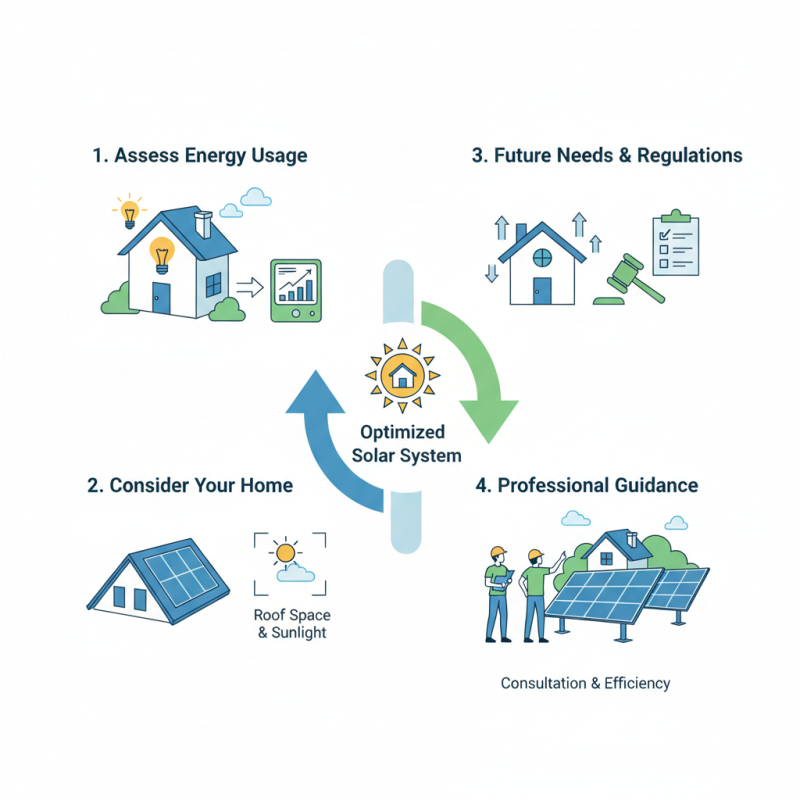
When determining the size of a solar system for your home, understanding your energy consumption is key.
According to the U.S. Energy Information Administration (EIA), the average American household uses about
877 kWh per month. This figure can vary widely based on factors like
home size, climate, and the number of occupants.
To accurately estimate your needs, review past utility bills. Look for monthly usage and seasonal variations.
Many homeowners overlook peak usage months, which can lead to under-sizing their solar systems. Tracking
daily energy consumption can also reveal useful trends.
Tips:
Consider installing a home energy monitor. This device provides real-time data on your energy habits.
It can highlight areas where you can reduce consumption, like unplugging unused devices or using
energy-efficient appliances.
Another suggestion is to account for future changes. Family growth or new appliances can increase your
energy demand. It's crucial to let these factors shape your solar system size decision. Remember, each
home is unique. What works for one may not suit another. Being informed is essential.
When evaluating solar system options, climate plays a crucial role. Different regions receive varying amounts of sunlight, which directly affects solar efficiency. According to the National Renewable Energy Laboratory (NREL), areas with high solar irradiance can produce up to 25% more energy than those with less sunlight. Homeowners in sunny regions, like the Southwest U.S., may find that a smaller system meets their energy needs efficiently.
In contrast, homeowners in less sunny climates, such as the Pacific Northwest, should consider larger systems to account for reduced sunlight. NREL reports that energy production can drop by 10% to 30% in cloudier areas. Additionally, seasonal variations can challenge energy needs. During winter, decreased sunlight may necessitate more robust systems or supplemental energy sources. Therefore, assessing local weather patterns is essential for sizing a solar system effectively.
It’s vital to consider roof orientation and shading when planning. Even in sunny areas, roofs with poor exposure may significantly limit solar gain. A study by the Solar Energy Industries Association (SEIA) suggests that improper installation can lead to efficiency losses, reflecting the importance of a thorough site assessment. After initial system size estimation, homeowners should reassess regularly based on changing energy needs and environmental factors.
When calculating the size of your solar system, start with your energy consumption. Look at your electricity bills for the past year. Gather data on your monthly usage in kilowatt-hours (kWh). This will help you understand how much solar energy you need.
Next, consider your location. The amount of sunlight you receive varies by region. A solar panel's efficiency can be influenced by local weather. Research the average daily sunlight hours in your area. Use this data to estimate how many panels you may require to meet your energy needs.
Lastly, assess your roof space. The available area will dictate the number of panels you can install. Measure your roof's size and angle. Take note of any obstructions like trees or buildings that may cause shading. These factors can impact the system’s efficiency. Reflect on these elements to determine the ideal solar system size for your home.
When assessing the available space for solar panels on your home, start with the roof. A typical residential solar panel measures about 65 inches by 39 inches. Most homes can fit around 20 to 25 panels, depending on the roof's size. According to the U.S. Department of Energy, a 5kW system needs approximately 300 square feet of space. However, not all roofs are suitable due to orientation or shading.
Consider the angle of your roof as well. Ideal angles range from 15 to 40 degrees. If your roof isn't optimal, panel efficiency may suffer. You might have to rethink your approach or even consider ground-mounted systems if space allows. This can complicate installation but might provide better output.
It’s essential to evaluate shading from trees or nearby buildings. Even small shadows can significantly decrease efficiency. A report from the National Renewable Energy Laboratory (NREL) states that shaded panels can lose up to 80% of their output. In this case, it may be necessary to trim trees or choose a different location for your panels. Always take time to measure and analyze before installation. These steps will ensure that your solar system operates efficiently.
When considering a solar system for your home, budgeting goes beyond just the installation costs. It is crucial to account for ongoing maintenance expenses. Regular maintenance ensures optimal system performance and longevity. This often involves routine checks and occasional repairs. However, these costs can vary widely based on your system's size and local service rates.
Tips to consider: allocate around 10% of the installation cost annually for maintenance. This will help you prepare for any unexpected repairs. Research local service providers to get an idea of their rates. Not all providers offer the same quality, so choose wisely.
Another aspect is the potential return on investment (ROI). Evaluate the long-term energy savings versus the initial outlay. It can take years to see a significant return. Thus, the initial financial strain could be challenging. Calculate how much energy your system will produce. This can be influenced by location, weather, and installation angle. These variables can impact your savings over time, making accurate projections essential.
| Home Size (sq ft) | Average Monthly Energy Usage (kWh) | Suggested Solar System Size (kW) | Estimated Installation Cost ($) | Annual Maintenance Cost ($) |
|---|---|---|---|---|
| 1,000 | 800 | 5 | 15,000 | 200 |
| 1,500 | 1,200 | 8 | 24,000 | 300 |
| 2,000 | 1,600 | 10 | 30,000 | 350 |
| 2,500 | 2,000 | 12 | 36,000 | 400 |
: Climate affects sunlight levels. Areas with high solar irradiance can produce 25% more energy than cloudier regions.
Homeowners in less sunny areas may need larger systems to compensate for reduced sunlight availability.
Roof orientation and shading directly impact solar gain, even in sunny climates. Poor exposure can lead to efficiency losses.
Most homes can fit around 20 to 25 solar panels, depending on roof size and orientation.
Regular maintenance is crucial. Allocate about 10% of installation costs annually for maintenance and potential repairs.
Yes, shaded panels can lose up to 80% of their output. Evaluate shading from trees and buildings before installation.
Budgeting includes installation costs and ongoing maintenance. Prepare for unexpected repairs to ensure optimal performance.
Ideal angles for solar panels range from 15 to 40 degrees. Non-optimal angles can reduce efficiency significantly.
It can take years to see a significant return on investment. Consider long-term energy savings versus initial costs.
Energy production is influenced by location, weather, roof angle, and shading. Accurate projections are essential for budgeting.
Determining "what size solar system do I need for my house" involves several key considerations that can help homeowners make informed decisions. First, it is essential to understand your home's energy consumption by analyzing past utility bills and taking note of seasonal variations. This foundational knowledge will guide you in selecting an appropriate solar system that meets your energy demands.
Next, consider the climate in your area, as it affects solar panel efficiency and energy output. Once you have this information, you can calculate the ideal size of your solar system, factoring in available space for installation. Additionally, budgeting for both installation and regular maintenance costs will ensure that transitioning to solar energy is economically viable. By addressing these areas, homeowners can effectively assess their needs and select the right solar system for their properties.

Zenvyra