Designing an efficient solar energy system requires more than placing panels on a sunny roof. It begins with understanding how electricity is used throughout the day. A home may consume power during breakfast, while an office may peak after noon. This difference shapes the system’s size, inverter selection, and battery strategy. The practical question is how to design an efficient solar energy setup without creating unnecessary costs or unreliable production.
Experienced designers examine twelve months of electricity bills, roof orientation, shading, weather patterns, and available installation space. A chimney shadow at 3 p.m. can reduce output more than expected. Even a thin layer of dust may affect performance in dry regions. High-efficiency panels can help, but they cannot repair poor wiring, weak ventilation, or incorrect placement. Professional load calculations and site surveys remain essential.
Safety matters.
Qualified installers should follow local electrical codes and use certified equipment. They should also explain maintenance access, monitoring systems, warranties, and emergency shutdown procedures. Battery systems require additional attention because temperature, ventilation, and charging limits affect both performance and safety. No design is perfectly predictable. Cloud cover, future energy use, and aging equipment introduce uncertainty. That uncertainty deserves honest planning, not exaggerated promises. A reliable system balances production, resilience, budget, and environmental conditions. The best design is not always the largest one. It is the one that performs consistently in real life.
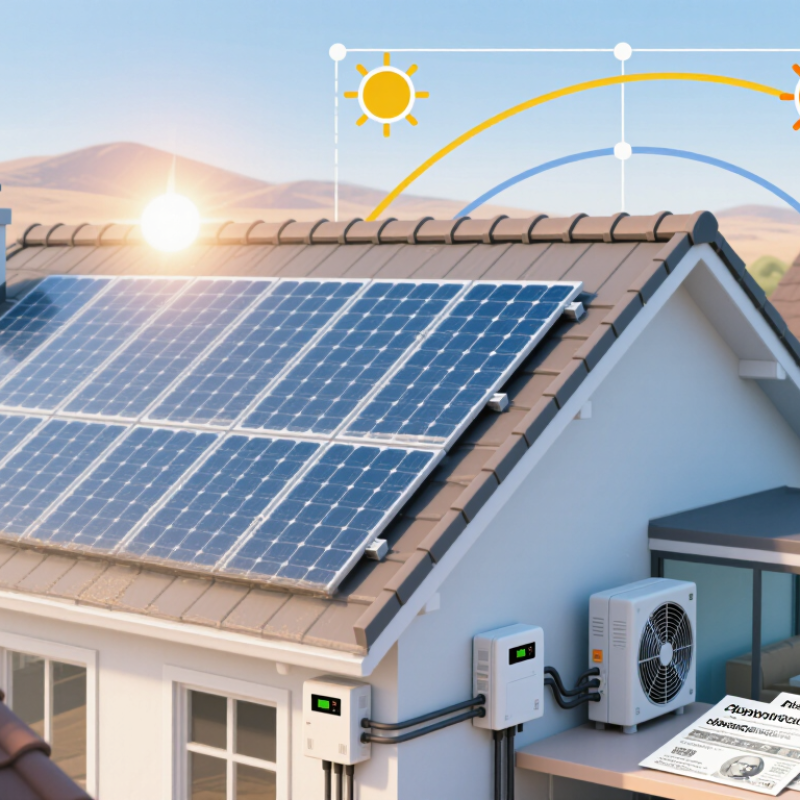
How to Design an Efficient Solar Energy System?
Define Energy Needs and Solar Resource Conditions
A reliable solar design begins with measured energy demand, not an attractive panel count. Collect at least twelve months of electricity bills. Record daily consumption, peak demand, and seasonal changes. A refrigerator, pump, or heating system may create short but important spikes. Smart-meter data is more useful than monthly averages alone.
Solar resource assessment requires more than checking a sunny weather forecast. Review global horizontal irradiance, shading, roof direction, tilt, and local temperature. The Global Solar Atlas provides long-term solar-resource maps for project screening. For bankable planning, compare these estimates with satellite or ground-based measurements. The International Renewable Energy Agency reported 345.5 gigawatts of solar capacity additions worldwide in 2023. That rapid growth does not remove the need for site-specific analysis. PV performance falls as module temperature rises. Dust, snow, and wiring losses also reduce actual output.
Tips: Build an hourly load profile before choosing system size. Use conservative solar-yield assumptions. Include a battery only after identifying evening demand and backup requirements. Check nearby trees at morning, noon, and late afternoon. Small shadows can affect several modules. I would also test a lower-yield scenario, because perfect weather data is impossible. That uncomfortable check often exposes an oversized system. As a practical rule, compare predicted output with real bills after installation, then adjust assumptions during the first year.
| Category | Design Dimension | Example Data | Unit | Design Relevance |
|---|---|---|---|---|
| 1. Define Energy Needs | ||||
| Energy Demand | Average daily electricity consumption | 18.0 | kWh/day | Establishes the baseline energy that the solar system should supply. |
| Energy Demand | Monthly electricity consumption | 540 | kWh/month | Calculated from 18.0 kWh/day × 30 days; actual utility data should be used when available. |
| Energy Demand | Annual electricity consumption | 6,570 | kWh/year | Calculated from 18.0 kWh/day × 365 days and useful for annual energy-yield comparisons. |
| Load Profile | Daytime energy use | 7.2 | kWh/day | Daytime loads can be supplied directly by solar generation, reducing battery or grid usage. |
| Load Profile | Evening and nighttime energy use | 10.8 | kWh/day | Represents 60% of daily demand and indicates the potential need for energy storage or grid support. |
| Peak Demand | Maximum simultaneous load | 6.5 | kW | Used to select the inverter output rating and assess whether high-power appliances can operate together. |
| Critical Loads | Essential backup load | 2.5 | kW | Includes selected lighting, refrigeration, communications, and essential electronics during an outage. |
| Load Variability | Seasonal demand increase | 15 | % | Provides a planning allowance for higher cooling or heating demand during extreme weather. |
| 2. Assess Solar Resource Conditions | ||||
| Solar Resource | Average peak sun hours | 4.5 | hours/day | Represents the average daily solar irradiation expressed as equivalent hours at 1,000 W/m². |
| Solar Resource | Lowest-month peak sun hours | 3.1 | hours/day | Useful for checking winter or low-sun performance instead of relying only on the annual average. |
| Site Conditions | Unshaded roof or ground area | 42 | m² | Determines whether the required photovoltaic array can physically fit at the installation site. |
| Site Conditions | Roof orientation | South-facing | Direction | In the Northern Hemisphere, a south-facing surface is generally favorable for annual solar production. |
| Site Conditions | Roof tilt | 30 | degrees | A moderate tilt can provide good annual solar exposure; the optimal angle depends on latitude and design goals. |
| Shading | Annual shading loss | 5 | % | Accounts for nearby trees, buildings, roof structures, and other obstructions that reduce solar yield. |
| Climate | Design ambient temperature range | −5 to 40 | °C | Helps verify that photovoltaic modules, inverters, batteries, and protection equipment are suitable for local conditions. |
| 3. Preliminary System Sizing | ||||
| PV Array | Estimated system losses | 20 | % | Represents combined losses from temperature, wiring, inverter conversion, mismatch, dirt, and availability. |
| PV Array | Required photovoltaic capacity | 5.0 | kWp | Estimated using 18.0 kWh/day ÷ 4.5 peak sun hours ÷ 0.80 performance ratio. |
| PV Array | Expected average daily solar generation | 18.0 | kWh/day | Estimated using 5.0 kWp × 4.5 peak sun hours × 0.80 performance ratio. |
| PV Array | Estimated annual solar generation | 6,570 | kWh/year | Approximate annual output under the stated average resource and loss assumptions. |
| PV Array | Approximate module count | 13 | modules | Based on 13 modules rated at approximately 400 W each; the final count depends on available module ratings and layout. |
| PV Array | Approximate module area | 26 | m² | Assumes approximately 2.0 m² per module, excluding access paths and required installation clearances. |
| Inverter | Recommended continuous AC rating | 6.0 | kW | Should be checked against the 6.5 kW peak load, motor-starting currents, local electrical rules, and the PV array ratio. |
| Battery Storage | Target usable backup capacity | 10.0 | kWh | Can cover approximately 10 kWh of selected evening and critical loads; actual autonomy depends on operating conditions. |
| Battery Storage | Nominal battery capacity at 90% usable depth | 11.1 | kWh | Calculated as 10.0 kWh ÷ 0.90; temperature, aging, reserve capacity, and round-trip efficiency require additional review. |
| 4. Key Design Checks | ||||
| Winter Performance | Estimated lowest-month daily output | 12.4 | kWh/day | Estimated using 5.0 kWp × 3.1 peak sun hours × 0.80 performance ratio; supplemental energy may be required. |
| Energy Balance | Average daily production margin | 0 | kWh/day | The preliminary array is matched to average daily demand; a larger array may be preferred for winter, battery charging, or future loads. |
| Future Planning | Recommended expansion allowance | 10–20 | % | Allows for additional appliances, electric vehicle charging, heat pumps, degradation, or increased electricity consumption. |
| Verification | Required site and electrical assessments | Load monitoring, shading survey, structural review, voltage study, and code compliance | Assessment items | Final design should be based on measured loads, local solar data, equipment specifications, structural capacity, and applicable regulations. |
| Planning note: This is a realistic preliminary design example for a site with 18.0 kWh/day of electricity demand and 4.5 average peak sun hours per day. Actual system sizing should use local solar-irradiance data, interval load measurements, shading analysis, equipment temperature coefficients, battery operating limits, and local electrical requirements. | ||||
Collect at least twelve months of electricity bills. Add smart-meter data when available. Record daily use, peak demand, and seasonal changes. A refrigerator or pump may create brief spikes.
Monthly averages can hide evening demand and short power surges. An hourly profile shows when electricity is actually used. This helps avoid choosing an oversized system.
Check roof direction, tilt, shading, temperature, dust, snow, and wiring losses. Inspect nearby trees in the morning, at noon, and late afternoon. Small shadows can affect several panels.
Use long-term solar-resource data and compare it with satellite or ground measurements. Apply conservative production assumptions. Perfect weather data is impossible, unfortunately.
Add a battery after identifying evening consumption and backup needs. It may be unnecessary when daytime electricity use is already high. The decision should follow measured demand, not enthusiasm.
Leave clear maintenance pathways and emergency access. Plan simple cable routes. Keep equipment away from standing water, extreme heat, and tripping areas. Measure twice.
A qualified installer should verify structural loads, grounding, overcurrent protection, and connection points. Test insulation, polarity, grounding, and system performance. Do not guess.
Compare predicted output with real electricity bills during the first year. Record repairs, readings, and weather changes. Revise assumptions when new shadows or changing energy use appear. I would not trust the original plan blindly.
Designing an efficient solar energy system begins with understanding the property’s electricity needs, daily consumption patterns, available roof or ground space, sunlight exposure, and local weather conditions. The goal of how to design an efficient solar energy setup is to match energy production with demand while allowing room for seasonal changes and future expansion. Based on these factors, users can choose a suitable configuration, such as a grid-connected, battery-supported, or standalone system.
The next steps involve accurately sizing the solar panels, batteries, inverter, wiring, and protection devices to maintain reliable performance without unnecessary expense. A well-planned layout should minimize shading, use safe equipment spacing, and simplify maintenance access. Proper installation must include grounding, weather protection, ventilation, and compliance with applicable safety requirements. Finally, monitoring energy generation, battery health, and system efficiency helps identify problems early and supports continuous improvements, ensuring dependable output and better long-term value.

 Zenvyra