China’s solar market is vast, but more choice can create costly confusion. A rooftop in Shenzhen faces different conditions from a factory in Xinjiang. Roof structure, shading, electricity tariffs, storage needs, and maintenance access all matter.
The International Energy Agency’s Renewables 2024 report expects China to account for almost 60% of global renewable capacity growth through 2030. IRENA also reported 585 gigawatts of renewable capacity added worldwide in 2024, with China as the largest contributor. These figures show strong momentum, not a universal buying recommendation. The cheapest panel may perform poorly under heat, dust, or partial shade. The largest battery may remain underused.
So, how to choose the right solar solution for your needs? Compare complete systems, not isolated components. Examine module efficiency, inverter warranties, battery cycle life, local installation experience, and expected annual yield. Request production estimates based on your roof’s orientation and hourly electricity use. Independent tools, such as NREL’s PVWatts Calculator, can support a realistic first estimate.
Fatih Birol, Executive Director of the IEA, called solar PV “the new king of electricity markets.” His statement captures the sector’s direction, but not every customer’s decision. A villa may need a compact rooftop system. A workshop may benefit more from solar, storage, and load management. No ranking fits every roof. That is the uncomfortable part. This China Top 10 guide compares practical solutions while recognizing that prices, policies, grid conditions, and installer quality change quickly. Verify current data before signing a contract.
What Solar Solutions Are Available in China?
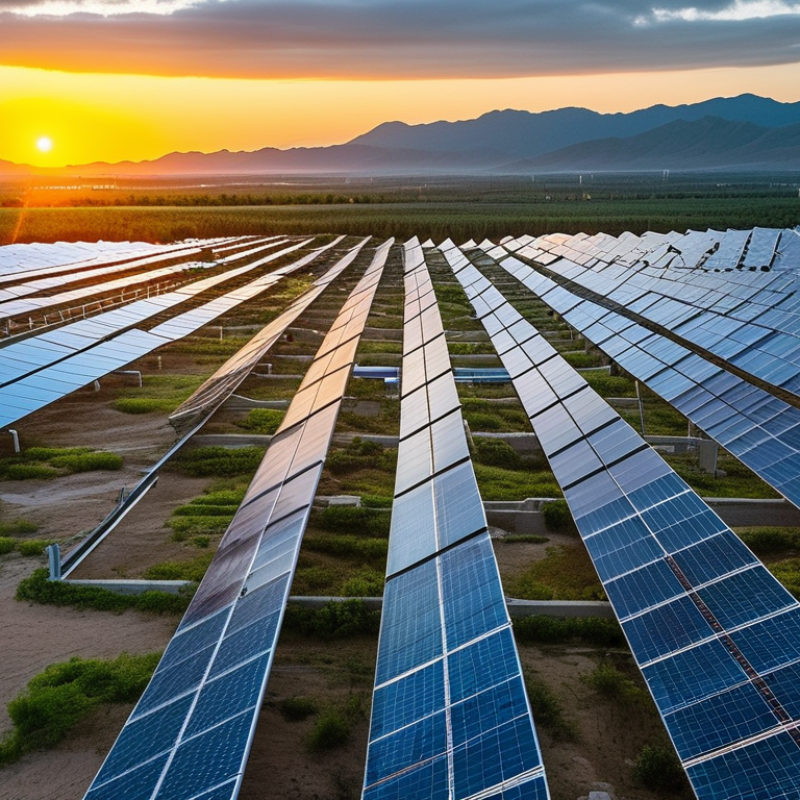
China offers a wide range of solar solutions, from desert power plants to apartment rooftops. The National Energy Administration reported 887.9 GW of cumulative solar capacity by the end of 2024. Utility-scale photovoltaic projects dominate large open areas, especially in western provinces. They connect with long-distance transmission networks and support national electricity demand. Distributed rooftop systems serve factories, warehouses, farms, and homes. They can reduce daytime grid purchases, but roof condition and local connection limits matter.
Building-integrated photovoltaics place solar glass, façades, or shaded canopies into new construction. Agrivoltaic projects combine panels with crops or grazing, although poor designs may reduce agricultural output. Floating solar uses reservoirs and industrial ponds where land is scarce. Desert projects can also include ecological restoration and energy storage. The International Energy Agency’s Renewables 2024 report expects China to contribute nearly 60% of global renewable capacity growth through 2030. The number is impressive. Practical results still vary.
Battery-coupled systems improve evening supply and reduce curtailment risks. Solar-plus-storage microgrids support islands, remote villages, ports, and emergency facilities. Solar carports can charge electric vehicles while shading parked cars. Small off-grid systems remain useful for monitoring stations and rural equipment. Choosing among these options requires measured irradiance, roof loading, soil conditions, tariffs, and maintenance access. A quick online estimate is not enough. Even experienced planners can miss seasonal shadows or transformer constraints. Performance should be checked with independent monitoring, verified warranties, and transparent lifecycle calculations.
| No. | Solar Solution | Typical Application | Typical Scale | Main Benefits | Key Limitations | Best Choice When |
|---|---|---|---|---|---|---|
| 1 | Residential Rooftop Solar PV | Homes, villas, rural residences and small buildings | Approximately 3–20 kW per household | Uses existing roof space, reduces grid electricity purchases and can be combined with battery storage | Output varies with weather; roof orientation, shading and structural condition are important | The building has a suitable roof and meaningful daytime or evening electricity demand |
| 2 | Commercial and Industrial Rooftop Solar PV | Factories, warehouses, shopping centers, offices and public buildings | Approximately 50 kW to several MW | Large roof areas, strong daytime load matching and potential reduction in peak grid purchases | Requires structural assessment, electrical coordination, fire-safety planning and agreement with the property owner | The site has a large, relatively unshaded roof and stable daytime consumption |
| 3 | Utility-Scale Ground-Mounted Solar PV | Large renewable-energy bases, desert areas, suitable industrial land and other open sites | Several MW to hundreds of MW | Economies of scale, centralized operation and high annual electricity production | Needs substantial land, grid-connection capacity, transmission planning and environmental assessment | Large land parcels and suitable grid infrastructure are available |
| 4 | Agrivoltaic Solar Systems | Crop production, greenhouses, livestock areas and elevated solar structures above farmland | From small demonstration projects to multi-megawatt sites | Combines electricity generation with agricultural activity and may provide shade or weather protection | Crop selection, sunlight distribution, access for machinery and local land-use rules require careful planning | Electricity generation is needed without fully removing agricultural use |
| 5 | Floating Solar PV | Reservoirs, water-treatment ponds, mine subsidence lakes and other suitable inland water bodies | Hundreds of kW to hundreds of MW | Preserves land, can reduce water evaporation and may benefit from water-based cooling conditions | Anchoring, wind and wave loads, water-quality protection, maintenance access and corrosion must be addressed | A suitable water surface exists and land availability is limited |
| 6 | Building-Integrated Photovoltaics | Solar façades, skylights, canopies, curtain walls and roof-integrated building elements | Residential, commercial and public-building projects | Generates electricity while serving as part of the building envelope and architectural design | Higher design complexity, stricter waterproofing and fire-safety requirements, and potentially higher installation cost | A new building or major renovation can integrate solar components from the design stage |
| 7 | Solar PV Plus Battery Energy Storage | Homes, factories, commercial buildings, microgrids and renewable-energy projects | From several kWh to hundreds of MWh | Shifts solar energy to later hours, improves backup capability and can support peak-demand management | Adds capital cost, thermal-management needs, safety controls, degradation and replacement considerations | Electricity demand continues after sunset or backup power is important |
| 8 | Solar Water Heating | Residential hot water, hotels, hospitals, schools and industrial preheating | Household systems to large centralized hot-water systems | Directly uses solar heat, lowers water-heating energy consumption and can be paired with auxiliary heating | Needs thermal storage or backup heating; freezing, scaling and maintenance may affect performance | Hot-water demand is regular and the site has suitable roof or ground space |
| 9 | Solar Street Lighting | Roads, rural paths, parks, campuses, parking areas and remote public spaces | Standalone units or grouped lighting installations | Avoids trenching and grid cabling, supports off-grid lighting and simplifies deployment in remote locations | Battery autonomy depends on weather and load; lighting performance is affected by shading, dust and maintenance | Grid connection is expensive or unavailable and lighting loads are relatively predictable |
| 10 | Off-Grid Solar Microgrids | Remote villages, islands, telecom sites, agricultural facilities and emergency power systems | From a few kW to several MW | Provides local electricity where grid access is limited and can integrate batteries and backup generators | Requires load management, battery sizing, system controls, regular servicing and contingency planning | Reliable local power is needed in an isolated or weak-grid location |
Ask for factory test reports, serial-number records, and traceability documents. Request electroluminescence images to reveal hidden cell cracks. Review flash-test results, mechanical-load data, and temperature-cycle performance. Paper alone is not proof.
Confirm the certificate matches the exact product model and intended market. Check IEC 61215 and IEC 61730 coverage where relevant. Verify the issuer, issue date, factory address, and listed models. A certificate may cover only one facility. Ask for scope evidence.
Request recent delivery records and references from similar projects. Review response times, claim procedures, warranty exclusions, and replacement arrangements. An independent factory audit can reveal weak packaging or poor warehouse control. Clear answers matter. Documents should remain consistent.
Look for incoming-material checks, process records, and final quality gates. Inspect packaging, storage conditions, and inspection consistency. Serial tracking should connect products with production records. I once underestimated spare parts and local technical support. That mistake increased installation costs.
Start with monthly bills, peak demand, roof direction, shading, and available space. A small home may need rooftop panels and a compact inverter. A factory with daytime machinery needs higher output and careful voltage planning. Popular lists can mislead.
No. Batteries add cost, weight, ventilation needs, and replacement planning. They can support evening lighting, refrigeration, or essential equipment. Hot regions require strong thermal management. Coastal sites need corrosion protection. Ask for tested performance data, safety certifications, and temperature limits. I would not trust a promise alone.
Compare inverter capacity, annual yield, monitoring, maintenance access, and warranty terms. Check whether the quote includes scaffolding and protection devices. Ask about wiring diagrams, permits, roof inspection, and load calculations. A cheap quote may omit future battery integration. Read every line.
Do not choose maximum capacity before checking local grid rules. Oversized systems may create unnecessary expense or export limitations. Request a realistic payback estimate and similar project references. Verify delivery dates and certification details in writing. No checklist is perfect. Recheck attractive assumptions.
China offers a wide range of solar solutions, including rooftop systems, commercial and industrial installations, utility-scale projects, off-grid power systems, energy storage, and integrated solar products. This overview explains how to compare China’s top 10 solar solutions by examining power output, system efficiency, installation requirements, energy storage compatibility, maintenance needs, and total cost of ownership. It also highlights the importance of matching system design with local sunlight conditions, electricity demand, available space, and project goals.
Choosing a suitable solution requires more than comparing prices. Buyers should evaluate product quality, safety certifications, testing reports, warranty terms, production consistency, technical support, delivery capability, and supplier reliability. By reviewing performance data and assessing long-term service commitments, users can reduce operational risks and improve investment value. The guide provides a practical framework for understanding how to choose the right solar solution for your needs while ensuring dependable performance, efficient energy use, and compliance with applicable requirements.

 Zenvyra