The quest to determine whether solar energy can power a whole house effectively is a pressing issue. Dr. Emily Carter, a renowned energy systems expert, states, "With advancements in technology, harnessing solar energy to power an entire home is increasingly feasible." This statement resonates with many homeowners seeking sustainable energy solutions.
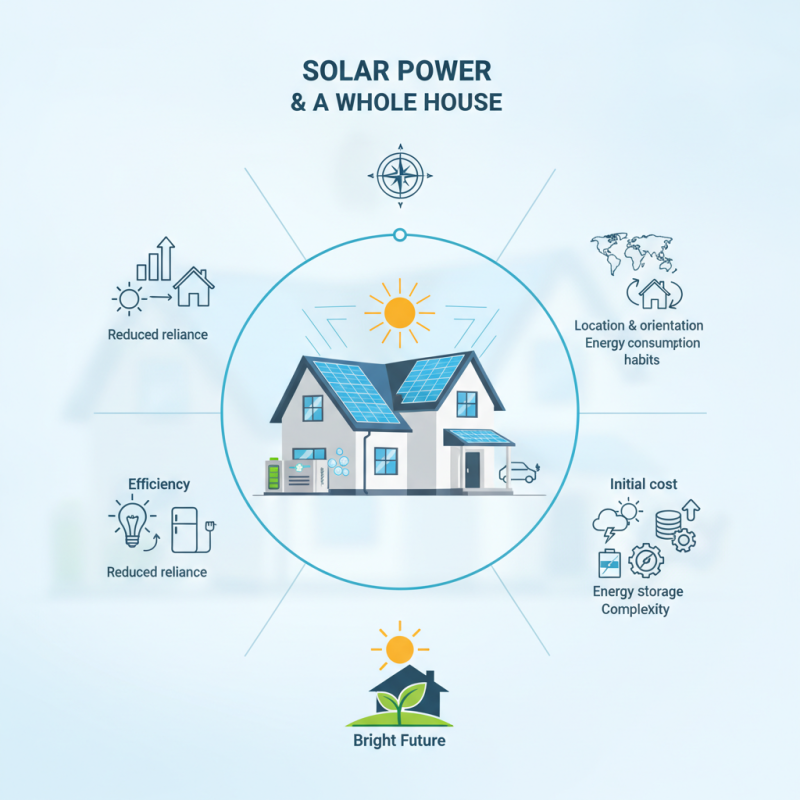
Solar panels today are more efficient than ever. They convert sunlight into electricity, reducing reliance on traditional energy sources. A well-designed solar energy system can cover a house's energy needs. However, the effectiveness varies based on location, roof orientation, and energy consumption habits.
Challenges still exist. Initial costs can be substantial, and not every home is suitable for solar installation. Weather influences generation patterns, and energy storage systems add complexity. Despite these considerations, the potential of solar energy remains bright for those committed to sustainability.
Understanding Solar Energy: Basics and Potential for Home Use
Solar energy is a powerful resource for homeowners. It offers a cleaner alternative to fossil fuels. Understanding how solar energy works is essential for effective home use. Solar panels convert sunlight into electricity. This process reduces dependency on non-renewable energy sources.
The potential for solar energy in households is significant. Many homes can generate enough electricity to meet their needs. However, performance can vary due to location, weather, and roof orientation. Not every home is ideal for solar installation. Some properties may have shading issues that hinder solar efficiency.
Investing in solar requires careful planning and research. Homeowners should consider local regulations and incentives. Evaluating energy needs and system size is crucial. Engaging with knowledgeable professionals helps navigate the complexities. This can lead to better decisions about solar investments, ensuring reliable, long-term energy solutions.
Types of Solar Energy Systems: Comparing Grid-Tied, Off-Grid, and Hybrid
When considering solar energy for a whole house, choosing the right system is crucial. There are three primary types: grid-tied, off-grid, and hybrid systems.
Grid-tied systems connect directly to the local utility. They provide a seamless way to use solar energy alongside traditional power sources. Many homeowners find this option appealing. If solar production is low, they can rely on the grid. However, if there's ever a blackout, these systems won't supply power.
Off-grid systems offer complete independence. They rely solely on solar energy and battery storage. This type is ideal for remote locations. These systems can be costly due to battery needs. Homeowners must ensure their energy consumption aligns with what the system can provide. Inadequate planning may lead to power shortages.
Hybrid systems combine the benefits of both grid-tied and off-grid options. They allow homeowners to store excess solar energy in batteries while still having access to the grid. This flexibility can enhance energy reliability but requires careful management. A poorly designed hybrid system may lead to inefficiencies or higher costs. Each type has strengths and weaknesses, necessitating thoughtful consideration before installation.
Key Components of a Solar Power System for Residential Applications
When considering solar energy for a home, it’s essential to understand its key components. A standard residential solar power system includes solar panels, inverters, a battery storage unit, and a mounting system. Each part plays a role in converting sunlight into usable electricity. Solar panels capture sunlight, while inverters convert that energy into a usable form. Battery storage allows excess energy to be saved for later use.
Tips: Ensure you choose solar panels that meet your energy needs. Conduct a thorough analysis of your home's energy consumption. The quality of inverters varies; invest in reliable options.
A mounting system secures panels to your roof or ground. It's vital to install these correctly to maximize sun exposure and efficiency. A poorly mounted system can lead to lower energy output. Regular maintenance may also be necessary to keep them clean and efficient.
Tips: Schedule periodic inspections. Monitor performance metrics to identify any issues early. Some systems may require more attention than others. Consider hiring professionals for installation and maintenance to ensure proper functioning.
Can Solar Energy Power a Whole House Effectively? - Key Components of a Solar Power System for Residential Applications
| Component |
Description |
Typical Capacity |
Estimated Cost |
| Solar Panels |
Converts sunlight into electricity. |
250-400 W per panel |
$250 - $400 per panel |
| Inverter |
Converts DC power generated by panels to AC power. |
2-10 kW |
$1,000 - $2,500 |
| Battery Storage |
Stores excess energy for use when solar generation is low. |
5-15 kWh |
$5,000 - $10,000 |
| Mounting Structure |
Framework for placing solar panels securely. |
N/A |
$500 - $1,500 |
| Charge Controller |
Regulates voltage and current to the battery. |
20-60 A |
$100 - $500 |
Efficiency and Performance: Factors Affecting Solar Energy Output
Solar energy has the potential to power an entire house efficiently, but several factors influence its performance. The orientation and pitch of solar panels play a crucial role in maximizing energy output. For instance, solar panels facing south in the northern hemisphere receive up to 50% more sunlight than those facing east or west. According to the National Renewable Energy Laboratory, optimal panel placement can enhance energy generation by 20-30%.
Another significant factor is the quality of solar panels. Different types of panels have various efficiency ratings. Monocrystalline panels typically offer efficiency rates around 15-20%, while thin-film panels may fall between 10-12%. Variability in sunlight due to seasonal changes also impacts energy production. For instance, homes in areas with frequent cloud cover may not harness solar energy as effectively.
Energy storage solutions also present challenges. Many homeowners invest in batteries to store excess power, yet these systems can be costly and have capacity limits. The cost of installation and maintenance can weigh heavily on families trying to maximize efficiency. Thus, while solar energy can power a whole house, its reliability varies based on these critical factors. Evaluating local conditions and potential obstacles is essential for effective implementation.
Economic Considerations: Costs, Incentives, and Return on Investment
When considering solar energy for a whole house, economic factors play a crucial role. The initial cost of installation can be significant, often deterring homeowners. However, various incentives exist. Government rebates and tax credits can offset expenses, making solar more accessible. These programs vary by region, so researching local options is essential. Homeowners should calculate potential savings against installation costs.
The return on investment, or ROI, can impact decisions too. Typically, solar energy systems yield savings on electricity bills. Over time, these savings can significantly outweigh initial costs. But results greatly depend on local energy prices, system efficiency, and available sunlight. Some homeowners report difficulty in estimating long-term ROI.
Reflecting on specific case studies could provide deeper insights. For instance, a family might experience different savings compared to another due to their energy habits. Understanding unique consumption patterns can clarify potential benefits. Ultimately, to ensure effective power generation, evaluating costs, incentives, and ROI is key. Each homeowner's experience is unique, highlighting the need for personalized analysis.
FAQS
: Solar energy is clean energy from the sun. It replaces fossil fuels and reduces environmental impact.
Solar panels convert sunlight into electricity. This process helps power homes without relying on non-renewable resources.
The three main types are grid-tied, off-grid, and hybrid systems. Each has distinct benefits and limitations.
Grid-tied systems connect to the local utility. They use solar and traditional power but fail during a blackout.
Off-grid systems operate independently. They require battery storage, which can be expensive and needs careful planning.
Hybrid systems combine grid-tied and off-grid benefits. They store excess solar energy but need careful management to avoid inefficiency.
Key components include solar panels, inverters, battery storage, and a mounting system. Each part is crucial for performance.
Proper installation maximizes sunlight exposure. Poorly installed systems can reduce energy output and efficiency.
Schedule regular inspections and monitor performance. Maintenance is key for optimal function and energy generation.
Evaluate your energy needs, check location suitability, and understand local regulations. Research is essential for smart choices.
Conclusion
The article titled "Can Solar Energy Power a Whole House Effectively?" explores the viability of solar energy for residential use. It begins by providing an overview of solar energy fundamentals, highlighting its potential as a renewable resource for homeowners. The discussion includes a comparison of different types of solar energy systems, such as grid-tied, off-grid, and hybrid setups, which offer varying levels of independence and efficiency based on the homeowner's needs.
Key components of a residential solar power system are examined, including solar panels, inverters, and battery storage, which play crucial roles in ensuring optimal energy production. Factors that affect solar energy output, such as location, climate, and system design, are also analyzed to give homeowners a realistic understanding of performance expectations. Finally, the article addresses economic considerations, including initial costs, available incentives, and the return on investment, which are essential for those contemplating making the transition to solar energy. Overall, the article provides a comprehensive look at whether solar energy can power a whole house effectively, considering both practicality and financial implications.

 Zenvyra