Choosing solar power is not simply a search for the lowest quoted price. Homeowners must compare performance, installation quality, financing terms, warranties, and long-term service. This guide explains how to compare different solar energy solutions using practical evidence rather than attractive sales claims. A reliable comparison considers your roof angle, local sunlight, household electricity use, shading, and future energy needs. A system that performs well in Arizona may not deliver the same value in northern England.
Look closely at the details. Ask for the panel and inverter model numbers, tested efficiency ratings, degradation guarantees, and estimated annual output. Request a clear breakdown of equipment, labor, permits, monitoring, maintenance, and battery costs. Certified installers should explain their assumptions and provide references from completed local projects. Independent reviews and utility data can support their claims, but neither source is perfect. Check everything.
Pay attention to warranty language. A long panel warranty may not cover poor installation or difficult replacement labor. Financing can also change the real cost, especially when interest, fees, or ownership conditions are unclear. Battery storage deserves separate analysis because backup needs differ from bill-saving goals. Small details matter.
No comparison is perfect. A spreadsheet can still mislead. Weather varies, electricity prices change, and actual production may fall below estimates. Treat forecasts as informed scenarios, not promises. By combining expert advice, documented performance, and your own consumption records, you can make a more confident and realistic solar investment decision.
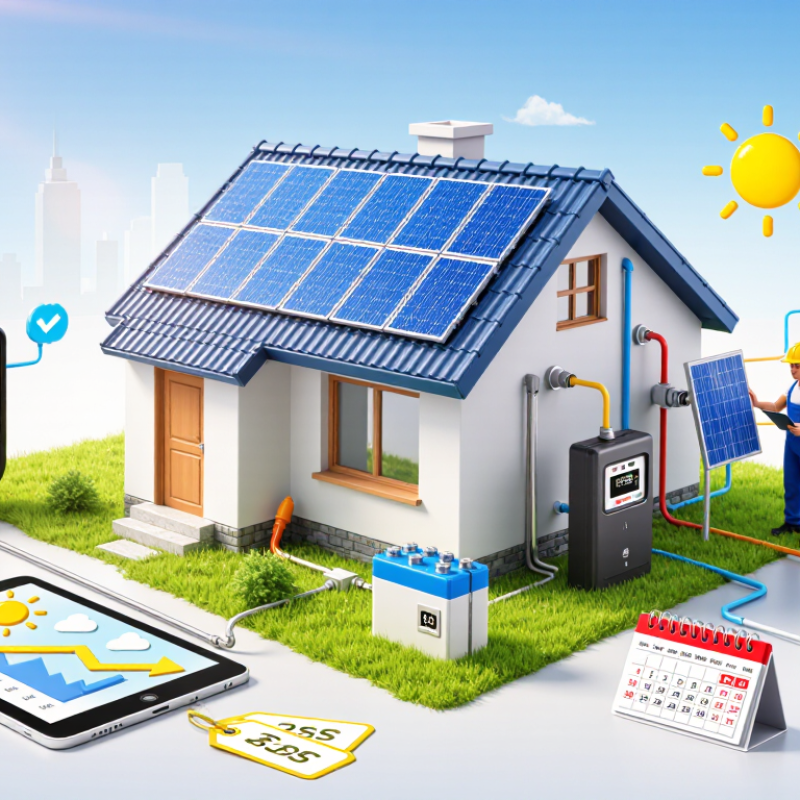
7 Tips on How to Compare Solar Energy Solutions?
Define Your Energy Needs and Solar Goals
Before comparing solar energy solutions, study your actual electricity use. Collect twelve months of utility bills, not just one recent statement. Note seasonal changes, heating equipment, cooling habits, and future household plans. A small apartment may need a different system from a home with an electric vehicle.
Look at your daily load pattern. Do you use the most power after sunset? If so, battery storage may support your goal better than extra panel capacity. If daytime usage is high, direct solar generation may offer stronger value. Write down clear priorities, such as lowering bills, improving backup power, or reducing grid dependence. Keep the goal specific.
Numbers matter.
During a residential assessment, I compare annual consumption with roof space, shading, roof age, and local weather data. A south-facing roof is not automatically perfect. Trees can cast long winter shadows, while older wiring may require professional upgrades. Ask a qualified installer for production estimates, equipment warranties, maintenance needs, and permits. Independent quotes can reveal unrealistic savings claims.
I once underestimated evening demand in an early planning review. The design looked efficient, but the household cooked and charged devices after sunset. That mistake changed the battery calculation. Your own habits may be less predictable than your bill suggests. Recheck them before signing any proposal.
| Comparison Dimension | Grid-Tied Rooftop Solar | Hybrid Solar with Battery Storage | Off-Grid Solar System | Community Solar Subscription | Ground-Mounted Solar |
|---|---|---|---|---|---|
| 1. Best-Matched Energy Goal | Reduce electricity bills while remaining connected to the utility grid. | Lower electricity bills and maintain backup power during grid outages. | Provide independent electricity where grid connection is unavailable or unreliable. | Access solar benefits without owning suitable property or installing equipment. | Generate substantial solar power when roof space, roof condition, or orientation is unsuitable. |
| 2. Typical System Scale | Approximately 3–10 kW for many households. | Approximately 5–15 kW of solar capacity, commonly paired with 10–30 kWh of battery storage. | Approximately 3–15 kW, depending on daily demand and the required battery reserve. | Usually a purchased or subscribed share of a larger shared solar project rather than a home-sized system. | Approximately 10 kW to several hundred kW, depending on land availability and electricity demand. |
| 3. Grid Dependence | High. Most systems shut down during an outage unless a separate backup function is installed. | Medium to low. Essential circuits can continue operating when the battery has sufficient charge. | Low. The system operates independently, but performance depends on solar resource and stored energy. | High. The customer generally remains connected to the utility grid. | Usually medium to high when connected to the grid; it can be designed with storage for greater resilience. |
| 4. Battery Requirement | Not normally required for bill reduction or grid export. | Recommended when outage protection, evening energy use, or backup power is a priority. | Essential in most installations because generation and consumption do not occur at the same time. | Usually not required at the customer’s property; project-level storage may be available. | Optional, but useful when the project must provide backup power or shift solar energy to later hours. |
| 5. Indicative Installed Cost | About USD 2.50–4.50 per watt before incentives, varying by location, permitting, and roof complexity. | About USD 3.50–7.00 per watt for solar plus storage before incentives. | About USD 4.00–10.00 per watt because batteries, controls, and backup equipment add cost. | Often requires little or no on-site installation cost; subscription or purchase terms vary by project. | About USD 1.50–3.50 per watt for larger installations, excluding unusual land, grid, or civil-work costs. |
| 6. Typical Energy Yield | Approximately 1,000–1,600 kWh per installed kW each year, depending on sunlight, orientation, shading, and system losses. | Solar yield is similar to a grid-tied system, but usable output also depends on battery efficiency and operating settings. | Approximately 1,000–1,600 kWh per installed kW each year; excess generation may be curtailed when batteries are full. | Depends on the customer’s allocated project share and local solar conditions; production is usually credited to the account. | Often 1,100–1,700 kWh per installed kW each year when the array has favorable orientation, spacing, and low shading. |
| 7. Space and Site Requirements | Generally needs about 20–70 square meters of usable roof area for a typical residential system. | Needs roof space plus a ventilated, accessible area for batteries and safety equipment. | Needs solar array space, battery housing, power controls, and room for maintenance access. | No dedicated roof or land is normally required at the customer’s property. | Needs suitable land, access roads, structural foundations, drainage planning, and distance from shading. |
| 8. Maintenance Needs | Low. Periodic monitoring, inspection, and occasional cleaning may be required. | Low to moderate. Solar maintenance is limited, while batteries require monitoring and eventual replacement planning. | Moderate. Batteries, charge controllers, and backup generators, if used, require regular checks. | Low for the customer; the shared project operator normally manages equipment maintenance. | Low to moderate. Vegetation control, cleaning, inspections, and inverter maintenance may be needed. |
| 9. Expected Equipment Life | Solar modules commonly have useful lives of 25 years or more; inverters often require replacement sooner. | Solar modules commonly last 25 years or more; battery service life is often about 8–15 years, depending on chemistry and use. | Solar modules may last 25 years or more; batteries and power electronics generally have shorter replacement cycles. | Depends on the shared project’s equipment, contract period, and operating agreement. | Solar modules commonly last 25 years or more; inverters, trackers, and other components may require replacement earlier. |
| 10. Main Advantages | Simple design, lower upfront cost than systems with batteries, and strong potential for daytime bill savings. | Backup capability, better control over evening consumption, and increased energy independence. | Independence from the utility grid and suitability for remote locations. | Low property requirements, convenient participation, and access for renters or unsuitable rooftops. | Flexible array orientation, easy expansion on suitable land, and strong potential for larger energy demand. |
| 11. Main Limitations | Usually cannot provide power during a grid outage and may export surplus electricity under changing utility rules. | Higher upfront cost, limited backup duration, and battery degradation over time. | Higher design complexity, larger upfront investment, and the need to manage energy carefully during low-sun periods. | Less direct control over equipment and savings depend on subscription terms, project output, and local regulations. | Requires available land, additional permitting, and potentially higher costs for foundations, wiring, and site preparation. |
| 12. Most Important Question to Ask | How much annual electricity do I use, and how much of that demand occurs during daylight hours? | How many critical loads must operate during an outage, and for how many hours? | What is my maximum daily energy demand during several consecutive low-sun days? | Are the subscription charges, crediting method, contract duration, and cancellation terms clear? | Is the land suitable for permits, interconnection, drainage, maintenance access, and future expansion? |
Crystalline silicon panels offer strong efficiency and mature supply chains. Thin-film panels may perform better in heat or weak light. They usually need more roof area.
Match system size with twelve months of electricity bills, roof space, and future demand. A modest home may need about 6 kilowatts. Heat pumps or electric vehicles increase demand.
No. Oversizing can reduce financial value when export limits or low tariffs apply. Battery costs may also change the result. Bigger is not automatically wiser.
Roof direction, tilt, chimney shade, and wiring routes all matter. Morning shadows can reduce output noticeably. Use location-based production modeling, not generic estimates.
A string inverter may cost less. Module-level electronics can reduce losses from partial shading. More components may also create more possible failure points.
Compare lifetime cost per kilowatt-hour, not only the installation quote. Include batteries, monitoring, roof repairs, maintenance, and inverter replacement. Forecasts can look too exact.
Review efficiency, temperature performance, degradation rate, cable protection, mounting hardware, and weather resistance. Ask for technical data sheets. Bright displays prove very little.
Verify licenses, insurance, safety training, and relevant experience. Ask who performs electrical work and inspections. Confirm permits and grid applications in writing.
Separate product coverage from workmanship coverage. Check exclusions, coverage periods, transfer rules, and claim procedures. Keep every document. A long warranty can still be difficult to use.
Be careful when technical questions receive vague answers. Pressure to sign quickly is another warning sign. Ask for recent references and realistic production estimates. Estimates are not guarantees.
Choosing the right solar setup begins with understanding your household’s energy use, future electricity needs, and overall sustainability goals. Learning how to compare different solar energy solutions involves reviewing available technologies, system sizes, panel layouts, storage options, and designs that suit your property. It is also important to compare upfront costs, financing methods, estimated energy production, and long-term savings rather than focusing only on the initial price.
A well-informed decision should also consider equipment quality, warranty coverage, installer experience, and service reliability. Compare expected performance under local weather conditions, maintenance requirements, monitoring features, and the availability of energy incentives. Finally, evaluate each option’s environmental impact, including its potential to reduce grid dependence and carbon emissions. By examining these factors together, homeowners can identify a practical, durable, and cost-effective solar solution that matches their budget, energy objectives, and long-term expectations.

 Zenvyra